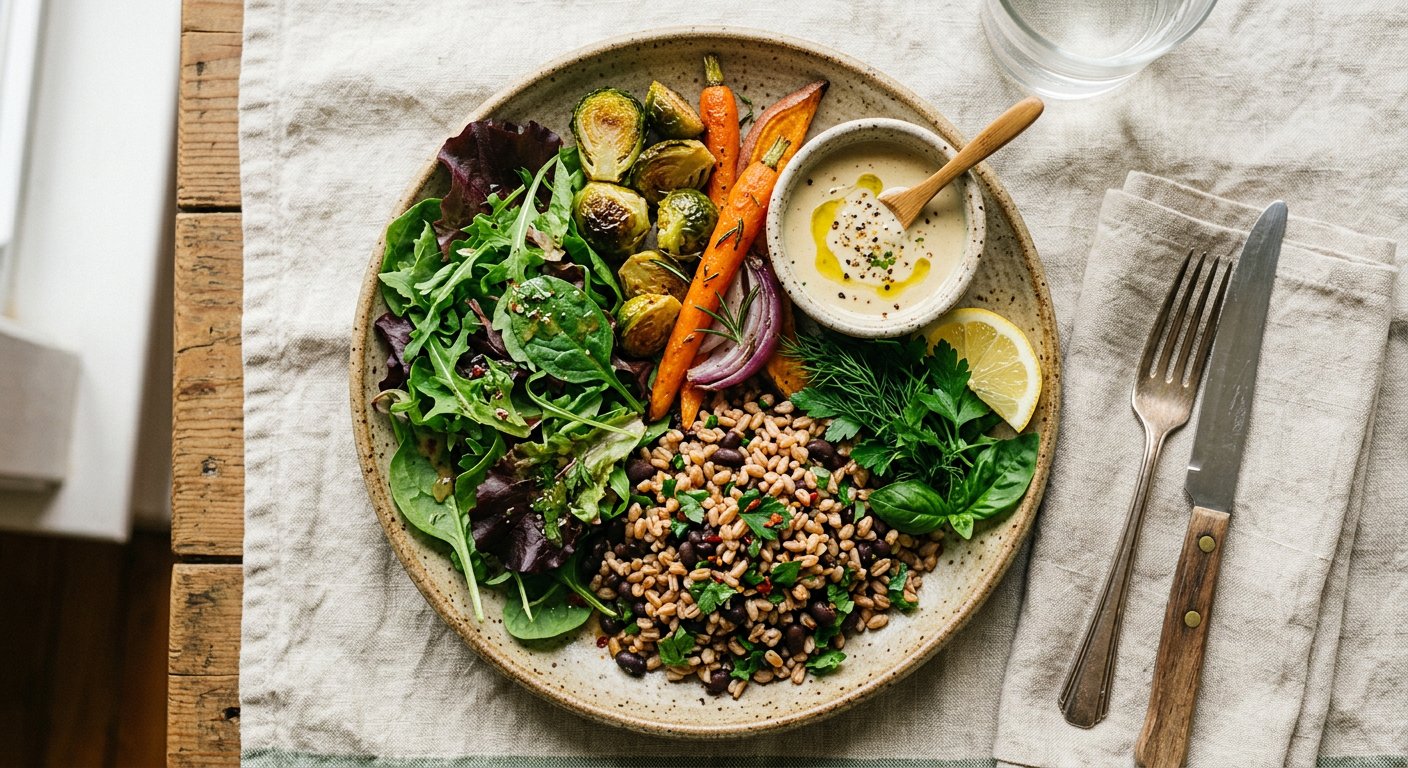
A balanced meal does not need to be complicated. It can be a familiar combination of foods that brings together flavor, nourishment and enough satisfaction to carry you through your day.
Start with what you enjoy
Think about the meals you already like. A few colorful vegetables or pieces of fruit can add freshness, texture and variety without asking you to rebuild your whole routine.
Add something satisfying
Beans, lentils, eggs, fish, tofu, yogurt, nuts and other protein-rich foods can make a meal feel more sustaining. Choose options that suit your tastes, budget and traditions.
Keep room for comfort and flexibility
Grains, potatoes, bread and other familiar staples can belong in a nourishing pattern. There is no need to label foods as perfect or forbidden; your overall routine matters more than any single meal.
Let your needs lead
Appetite, culture, health conditions, access to food and personal preference all shape what works. A balanced plate is a helpful idea, not a strict rulebook.
Try making a small adjustment that sounds enjoyable, then notice how it feels. If you have a medical condition or specific nutrition needs, ask a qualified health professional for guidance tailored to you.
This article is for general educational purposes and does not replace individualized medical advice, diagnosis or treatment. Talk with a qualified health professional about your own care.
Enjoyed this read? Explore more from our journal.
Back to Latest Blog